
The Cultural Power of the College Years (For Better or Worse)
L
By Lucas Rollins on October 10, 2026
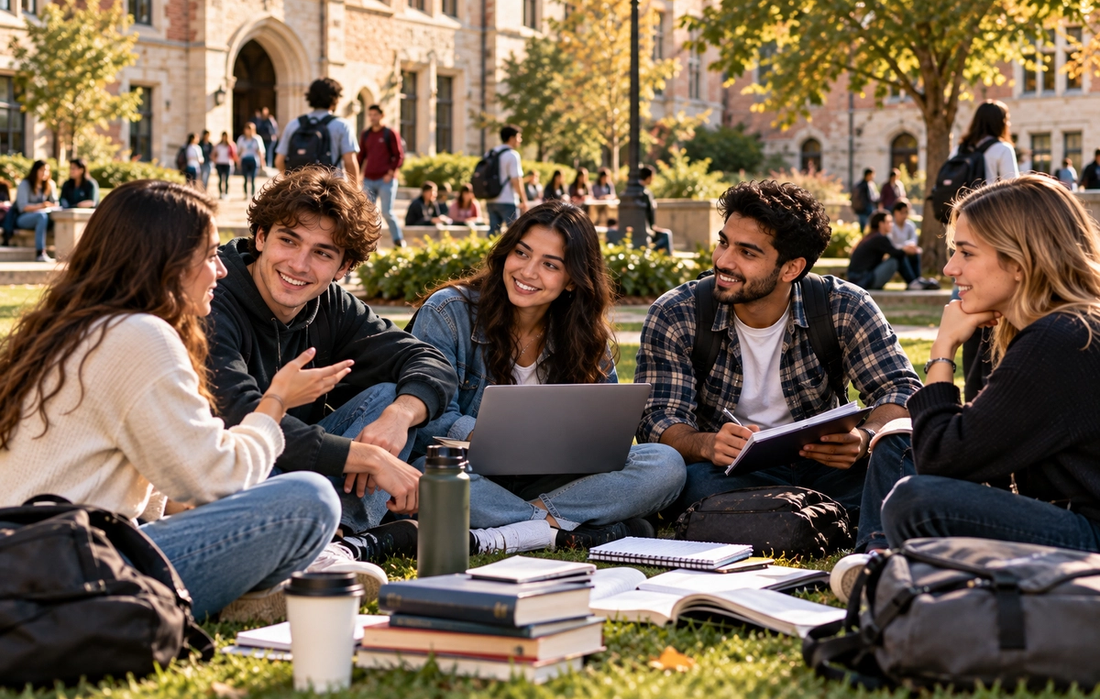
There’s a reason so many movies, novels, songs, and television shows are obsessed with college.
Four years of lectures shouldn’t be culturally interesting enough to inspire an entire genre. Yet college is rarely portrayed as simply an educational experience. It becomes the place where people leave home, reinvent themselves, discover new ideas, fall in love, make terrible decisions, protest, experiment, and decide what kind of adults they might become.
That gives the college years an unusual amount of cultural power.
For many people, they arrive at exactly the moment when childhood identities begin loosening but adult identities haven’t completely formed. New influences enter quickly. Friends become enormously important. Ideas that once seemed fixed become debatable.
Some of that can be transformative.
Some of it can make college feel far more important than it really is.
College puts thousands of people in transition together
Most environments contain people at many different stages of life.
College is unusual because it concentrates large numbers of people going through similar transitions at roughly the same time.
Many are living away from their families for the first time. They’re managing their own schedules, choosing their social circles, exploring relationships, and making decisions without the same level of parental oversight.
That creates an environment where experimentation becomes normal.
Someone who was quiet in high school can become socially confident. Someone raised with one worldview may encounter classmates who challenge it. A student who always assumed they would pursue one career may discover an entirely different field.
When thousands of people are reinventing themselves simultaneously, a distinctive culture emerges.
Your friends suddenly influence you enormously
College friendships can become intense very quickly.
You may live together, eat together, study together, travel together, and spend more time with friends than with your family.
Naturally, those people begin shaping you.
You discover their music. You borrow their expressions. You try food they grew up eating. You encounter political, religious, cultural, and philosophical views that may be completely different from those you knew at home.
Some influence is obvious.
Other changes happen so gradually that you only notice them when you return home and realize that you think, speak, or behave differently.
That can be one of college’s greatest strengths. Exposure to people unlike you can expand your understanding of what a normal life looks like.
But social influence can work in less helpful directions too.
Being surrounded by people who normalize unhealthy behavior, extreme competition, constant drinking, or relentless overwork can make those patterns feel ordinary.
Your environment doesn’t just influence what you do.
It influences what you stop questioning.
Campuses have historically been places where ideas spread
Universities do more than teach existing knowledge.
They create environments where ideas are debated, organized around, challenged, and sometimes transformed into movements.
Students have participated in major political, cultural, civil-rights, anti-war, environmental, and social movements across different countries and generations.
There are practical reasons for this.
Students are concentrated geographically. They have access to lectures, publications, organizations, and intellectual communities. Many have enough independence to question institutions while not yet being fully embedded in established professional structures.
That combination can produce extraordinary activism and creativity.
It can also produce groupthink.
A campus where everyone appears to agree can make disagreement feel socially expensive. People may adopt positions because their community rewards them rather than because they’ve carefully examined the arguments.
Universities can teach people to challenge assumptions.
They can also create new assumptions that nobody wants to challenge.
College creates its own language and rituals
Every campus develops a miniature culture.
There are traditions that sound ridiculous to outsiders, buildings known by nicknames, professors everyone has heard about, local restaurants students treat as sacred, annual events, rivalries, jokes, and stories passed from one class to another.
These things may seem trivial, but rituals create belonging.
When thousands of people arrive from different backgrounds, shared traditions give them something immediate in common.
The same process happens more broadly across student culture.
Music, fashion, slang, technology, dating habits, humor, and political conversations can spread quickly through campuses because students are constantly interacting with one another.
What begins in a relatively small community can eventually influence culture outside it.
The “college experience” can become its own pressure
There is also a downside to giving these years so much cultural importance.
Students are constantly told that college should be the best years of their lives.
You should make lifelong friends. Discover yourself. Fall in love. Travel. Attend parties. Build a career. Get excellent grades. Join organizations. Complete internships.
Preferably while having enough free time to enjoy all of it.
That’s an impossible standard.
If you’re lonely, stressed, uncertain, or simply having an ordinary semester, you may feel as though you’re wasting an experience you’re supposed to treasure.
But real college life contains boring Tuesdays.
It contains bad classes, disappointing friendships, homesickness, financial stress, terrible meals, awkward social situations, and weekends where nothing particularly memorable happens.
Those moments don’t mean you’re doing college incorrectly.
They mean you’re living an actual life instead of a coming-of-age movie.
Not everyone gets the same college experience
The romantic image of college often assumes a particular kind of student: young, living on campus, financially supported enough to participate fully in student life, and able to treat university as their main responsibility.
That isn’t everyone’s reality.
Some students commute. Some work long hours. Some care for children or relatives. Some are older. Some study remotely. Some can’t afford unpaid internships, spring-break trips, or constant social events.
Others may never attend college at all.
That’s important because culture sometimes treats college as the universal gateway into adulthood when it is actually one path among many.
People can experience independence, intellectual growth, friendship, experimentation, and reinvention without ever entering a university.
College doesn’t have exclusive ownership over becoming an adult.
The influence can last long after graduation
Years later, people may barely remember what appeared on a particular exam.
But they often remember the ideas, people, and experiences that changed how they understood the world.
A professor introduces a subject that becomes a career. A roommate exposes you to a completely different culture. A friendship changes what you expect from relationships. A failure forces you to reconsider who you thought you were.
That may be the real cultural power of college.
It isn’t simply that students learn information.
They encounter possibilities.
Different careers. Different lifestyles. Different beliefs. Different people. Different versions of themselves.
Some influences will last forever.
Others will seem ridiculous ten years later.
Both are part of the process.
College can change you, sometimes profoundly.
But it doesn’t finish you.
The person who graduates is still allowed to keep changing long after the campus disappears behind them.

How to Stop Procrastinating (Backed by Psychology)
You know the assignment is due Friday. You’ve known about it for two weeks. You even opened the document three days ago. And yet, somehow, it’s Thursday night and you’re suddenly very interested in reorganizing your desk, answering old messages, and researching something that has absolutely nothing to do with the assignment.
Legacy Park|3 weeks ago

How to Build Habits That Actually Last
Lian Everett|3 weeks ago

The Difference Between Discipline and Motivation
Joey Zimmerman|3 weeks ago

How to Become a Better Decision Maker
Noah Shepard|3 weeks ago

The Two-Minute Rule That Solves Procrastination
Lucas Rollins|3 weeks ago

How to Read More Books This Year
Colton Watts|3 weeks ago
Read More
The Real Difference Between a Job, a Career, and a Calling
Legacy Park|

The Real Difference Between Free and Paid AI Tools
Joey Zimmerman|

The Quiet Loneliness of College (And What Actually Helps)
Legacy Park|

Why “Finding Yourself” Takes Longer Than Anyone Told You
Lian Everett|

The Real Difference Between Being Smart and Being Educated
Lian Everett|

Why Some Students Peak in College (And Others Don’t)
Noah Shepard|
The Cultural Power of the College Years (For Better or Worse)
Lucas Rollins|

Why the Best Advice You Get in College Rarely Comes from a Professor
Colton Watts|

How to Use AI to Study Smarter (Not Just Faster)
Legacy Park|

The Apps Every Student Should Actually Download
Lian Everett|
How to Take Better Class Notes with Just Your Laptop
Joey Zimmerman|

How to Back Up Your Files (Before Your Laptop Dies Mid-Semester)
Lucas Rollins|

How to Spot AI-Generated Content Even When It’s Good
Colton Watts|
The Weirdest College Traditions Around the World
Joey Zimmerman|

The Movies Every College Student Should See at Least Once
Joey Zimmerman|

The Best Ways to Actually Enjoy a Weekend Off Campus
Joey Zimmerman|

The Games That Every Dorm Room Ends Up Playing
Joey Zimmerman|
The Most Unhinged True Stories from Ivy League Campuses
Lucas Rollins|

The Books That Are Actually Fun to Read (Not Just Required)
Colton Watts|

How to Stop Procrastinating (Backed by Psychology)
Legacy Park|